“The Criminals Are Working Together. We Must Strengthen Our Own Networks”: UWI and RSS Chart Regional Security Action Plan

by November 4, 2026

The UWI Regional Headquarters, Jamaica, W.I., Wednesday, November 4, 2026—The University of the West Indies (The UWI) and the Regional Security System (RSS) have committed to turning regional security dialogue into joint action, with a focus on tackling financial crime, strengthening climate security, advancing prevention strategies and harnessing artificial intelligence to build safer, more resilient Caribbean societies.

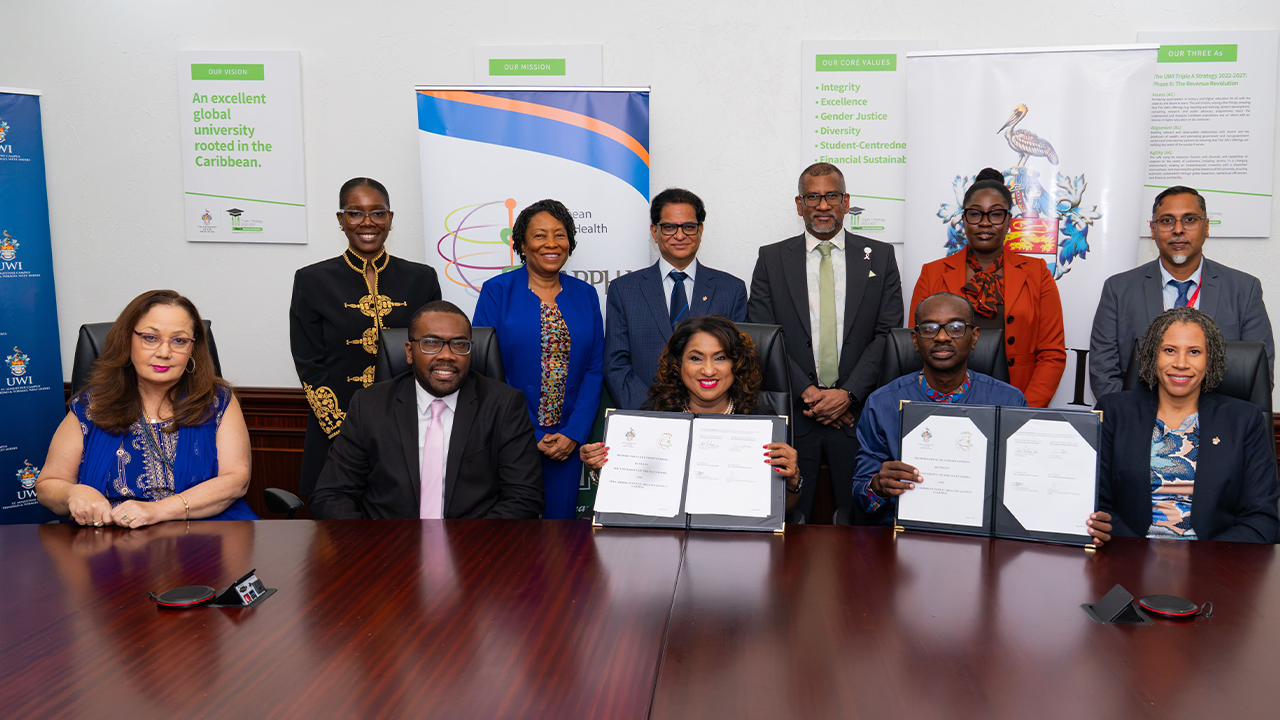
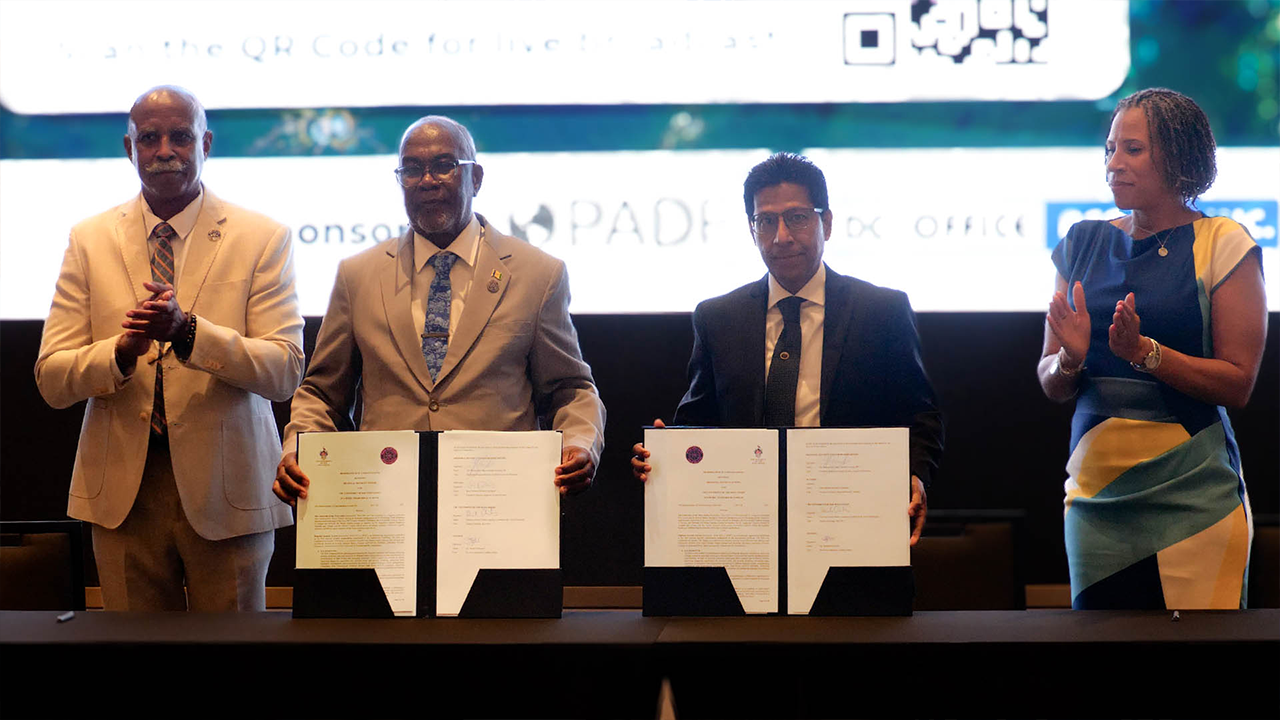
The commitment was formalised through the commemorative signing of a Memorandum of Understanding (MOU) during the inaugural Caribbean Security Futures Symposium, the first major initiative under the new RSS–The UWI partnership.

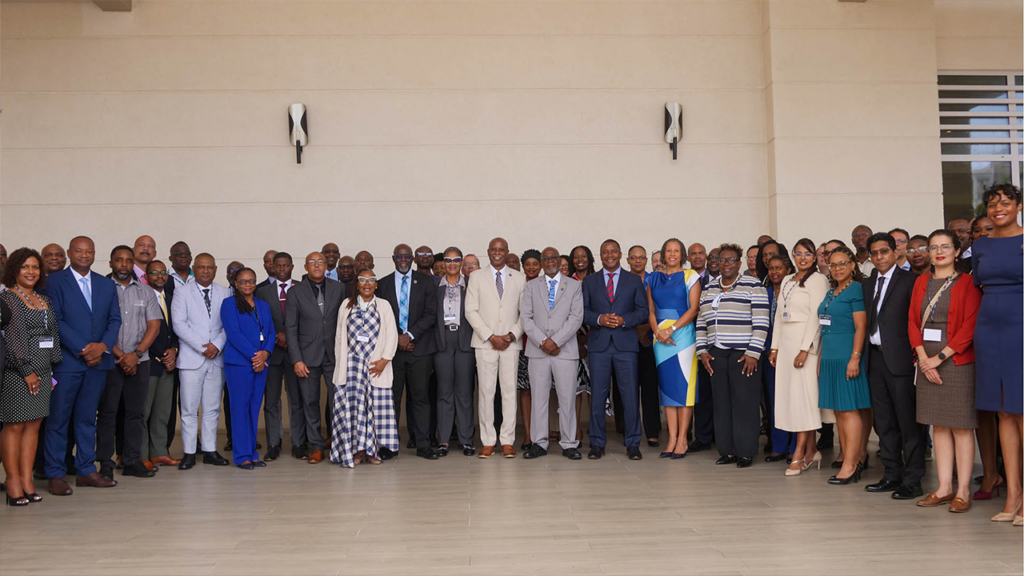
Held from October 7–9, 2026, at the Wyndham Grand Barbados, the three-day symposium was convened jointly by the two institutions under the theme “Towards Smart Technologies, Safe Spaces and Resilient Communities.” It brought together government ministers, defence and police chiefs, regulators, prosecutors, regional agencies and academics from across the Caribbean and beyond to identify priorities and collaborative approaches to emerging security challenges facing the region.

The commemorative signing ceremony, held on October 7, was executed by Major The Honourable St. Clair Leacock, Deputy Prime Minister of St. Vincent and the Grenadines and Chairman of the Council of Ministers of the Regional Security System, and Professor Derek Chadee, Deputy Principal of The UWI St. Augustine Campus, on behalf of Vice-Chancellor Professor Sir Hilary Beckles. The MOU establishes a framework for collaboration across six key areas: joint training and capacity building, an internship programme, research and development, crisis management and emergency response, community engagement, and innovation and technology development.

By combining the RSS’s security expertise with The UWI’s strengths in research and policy development, the partnership aims to bridge the gap between academic insight and practical decision-making. The partnership comes as interrelated challenges, including organised crime, cyber threats, illicit financial activity and climate-related risks, continue to test the resilience of Caribbean security institutions.

“The Caribbean does not lack an understanding of its security challenges. What we must now demonstrate is our collective ability to respond effectively, consistently and together,” said Ms. Sandrea Maynard, Pro Vice-Chancellor, Global Affairs at The UWI, who co-led the symposium’s organisation with Mrs. Rhea Reid-Bowen, Director of Strategic Services and International Affairs at the RSS Headquarters, and chaired the proceedings.

“Our ambition must be more than producing research about Caribbean security. It must be to put knowledge to work in strengthening institutions and protecting people,” she added. “The measure of this symposium must not be the number of recommendations we make, but the difference those recommendations make.”

Rear Admiral Errington Shurland, Executive Director of the RSS, said, “The partnership brings academic rigour and operational experience into close dialogue. We have come together with a shared responsibility: to ensure that the Caribbean continues to generate its own ideas, strengthen its own capabilities and help shape its own security future.”

Reflecting on the first day’s discussions, Brigadier-General The Honourable Carlos Lovell, Chief of Staff of the Barbados Defence Force, said the RSS–UWI partnership “offers a foundation for strategic security think tanks and a continuing network of research and foresight.” He added: “The criminals are working together for their own mutual interest and, in order to bring them to justice, we must discard the silos and strengthen our own networks.”

The programme opened with a framing address by The Honourable Wilfred Abrahams, S.C., M.P., Attorney-General of Barbados, on the region’s shared exposure to illicit financial flows, while Day 2 proceedings commenced with a framing address titled “The Importance of Shared Solutions for Building Regional Capacity” by Major The Honourable St. Clair Leacock.

Over the three-day symposium, participants emphasised the need to strengthen regional cooperation by placing financial investigations and asset recovery at the centre of efforts to combat organised crime, while improving information-sharing across agencies and jurisdictions. Discussions also highlighted the importance of pooling scarce resources, enhancing intelligence cooperation and developing shared mechanisms to build regional capacity.

Delegates stressed that climate-related threats must be treated as national security concerns given their impact on public health, communities and security systems. The symposium further underscored the value of prevention-focused approaches and community-led safety initiatives, recognising that enforcement alone cannot deliver secure societies. Participants also agreed that as artificial intelligence becomes increasingly embedded in security operations, its use must be guided by strong governance frameworks that ensure technology complements, rather than replaces, human judgement and accountability.

UWI academics contributed throughout the programme. They included Professor Justin Robinson, Pro Vice-Chancellor and Principal of the Five Islands Campus, on virtual assets; Professor Suzette Haughton on transnational organised crime and irregular migration; and Dr. Michał Pawiński of the Institute of International Relations, who chaired two panels.

Among RSS directors, Mrs. Rhea Reid-Bowen, Director of Strategic Services and International Affairs, chaired two panels, and Ms. Kisha Sutherland, Director of the Asset Recovery Unit, presented on “Strengthening Collective Security Through Financial Integrity.” Additionally, a number of experts and other personnel contributed to the various platforms in their areas of expertise. Some persons of note included Lieutenant Colonel Michael Jones, Executive Director, CARICOM IMPACS; Ms. Paula Llewellyn, former Director of Public Prosecutions, Jamaica; Mr. Marlon Cooper, Group Head, Managed Security Services, Digicel Business; Ms. Elizabeth Riley, Executive Director, Caribbean Disaster Emergency Management Agency; and Dr. Macarena Rau Vargas, President of the International CPTED Association.

In her closing remarks, PVC Maynard noted the intention of The UWI and the RSS to draw the symposium’s recommendations into a focused action framework, with named institutional leads, achievable milestones and a timetable for review. The partners plan to review progress within three months and reconvene within twelve months to assess implementation and track measurable outcomes.

On the final day of the symposium, to collectively close proceedings, Mrs. Reid-Bowen noted the symposium prompted participants to reflect on the nuances of the Caribbean criminogenic environment, and those enabling factors from social, economic and other dimensions impacting how threats and risks materialise in our space.

She noted it was an immense opportunity for assessing the adequacy of the RSS’s security architecture to respond to the evolving needs of this collective group, the strategic repositioning of this respected organisation that is needed, and the strategic partnerships necessary to ground its collective operational actions in thorough research on current and emergent security issues.

“The due-outs of the Symposium speak to the core of the strategic importance of our relationship with The UWI and the design and implementation of evidence-based security interventions that reflect regional realities,” she said.